
La saracinesca si è appena alzata e ci sono già cinque decisioni in attesa.
Quale delle sette auto di oggi entra per prima. Cosa dire al cliente di giovedì che non ha mai approvato il preventivo. Quali pastiglie ordinare e da chi. Se cedere lo spazio delle 12:30 o tenerlo. E perché il mese scorso c’è stato più lavoro per più o meno gli stessi soldi.
Nessuna delle cinque è difficile da sola. Il difficile è che sono cinque mestieri diversi e una sola persona alle 8:05.
Quella mattina non si risolve con più impegno né con un software in più. Si risolve quando ognuna di quelle decisioni arriva già preparata, con il suo ragionamento accanto, da qualcuno che capisce *quella cosa in particolare*.
Un’IA che fa tutto non è brava in niente in particolare
Per un paio d’anni la promessa è stata sempre la stessa: un’IA generalista a cui chiedere qualsiasi cosa. Va bene per scrivere un’email. Ma un’officina non va avanti con risposte generiche, va avanti con il giudizio del mestiere: chi ordina la coda guarda l’occupazione delle postazioni e gli impegni di riconsegna; chi prepara un preventivo guarda il catalogo, i tempari e la garanzia; chi decide un acquisto guarda prima cosa c’è già in magazzino.
L’industria del software è arrivata da sola alla stessa conclusione. Gartner prevede che il 40% delle applicazioni aziendali includerà agenti di IA specifici per compito nel corso del 2026, rispetto a meno del 5% nel 2025. Non è una moda di nomi: un agente con un perimetro chiaro è più veloce, più economico e, soprattutto, può rendere conto di ciò che fa.
“Un’officina non è un compito. È l’agenda, l’accettazione, il magazzino e la chiusura del mese, e nessuno di questi somiglia all’altro.”
Cosa cambia quando ogni area ha il suo agente
La differenza si vede dove si vede tutto: nella schermata che hai già aperta. In Cafler AI non c’è un pannello di IA separato in cui andare. Ogni modulo porta con sé l’agente della propria area, che fa il suo lavoro lì, con i dati della tua officina e nella tua lingua.
Un agente per area, una regola comune: la piattaforma calcola, l’agente spiega, e decidi tu.
Quelli che intervengono sul tuo schermo
Questi cinque non aspettano che glielo chieda: quando apri il modulo, il suggerimento è già lì.
- Nell’agenda. Da quale veicolo iniziare e perché, in una riga per auto: riconsegna promessa, durata, ricambi disponibili e capacità dell’officina. L’ordinamento lo calcola la piattaforma.
- Nei tuoi clienti. Quali clienti vale la pena ricontattare e per quale motivo concreto — una revisione in arrivo, una manutenzione in scadenza, pneumatici vicini al limite — in ordine di priorità, e ti mostra anche chi ha escluso e perché. Entra in lista solo chi ha dato il consenso: lì non ci sono zone grigie.
- Nei preventivi. Prendi ciò che hai scritto a mano o in un messaggio e diventa un elenco di voci abbinate al tuo catalogo reale. Gli importi vengono dalle tue tariffe, e ciò che non è riuscito ad abbinare torna segnalato perché tu lo controlli.
- Negli acquisti. Propone quali ricambi ordinare e a quale fornitore, controllando prima il tuo magazzino, con il ragionamento accanto a ogni raccomandazione. Confrontare non significa più avere sei schede aperte.
- Negli ordini di lavoro. Quando chiudi la checklist, raccoglie ciò che è emerso sul veicolo e prepara l’aggiornamento per il cliente: come sta la sua auto e di cosa ha bisogno. Pronto da inviare, parte quando lo confermi e resta registrato nell’ordine.
Vuoi sapere prima di tutti cosa arriva sulla piattaforma?
Voglio le novitàQuelli che aspettano che tu chieda
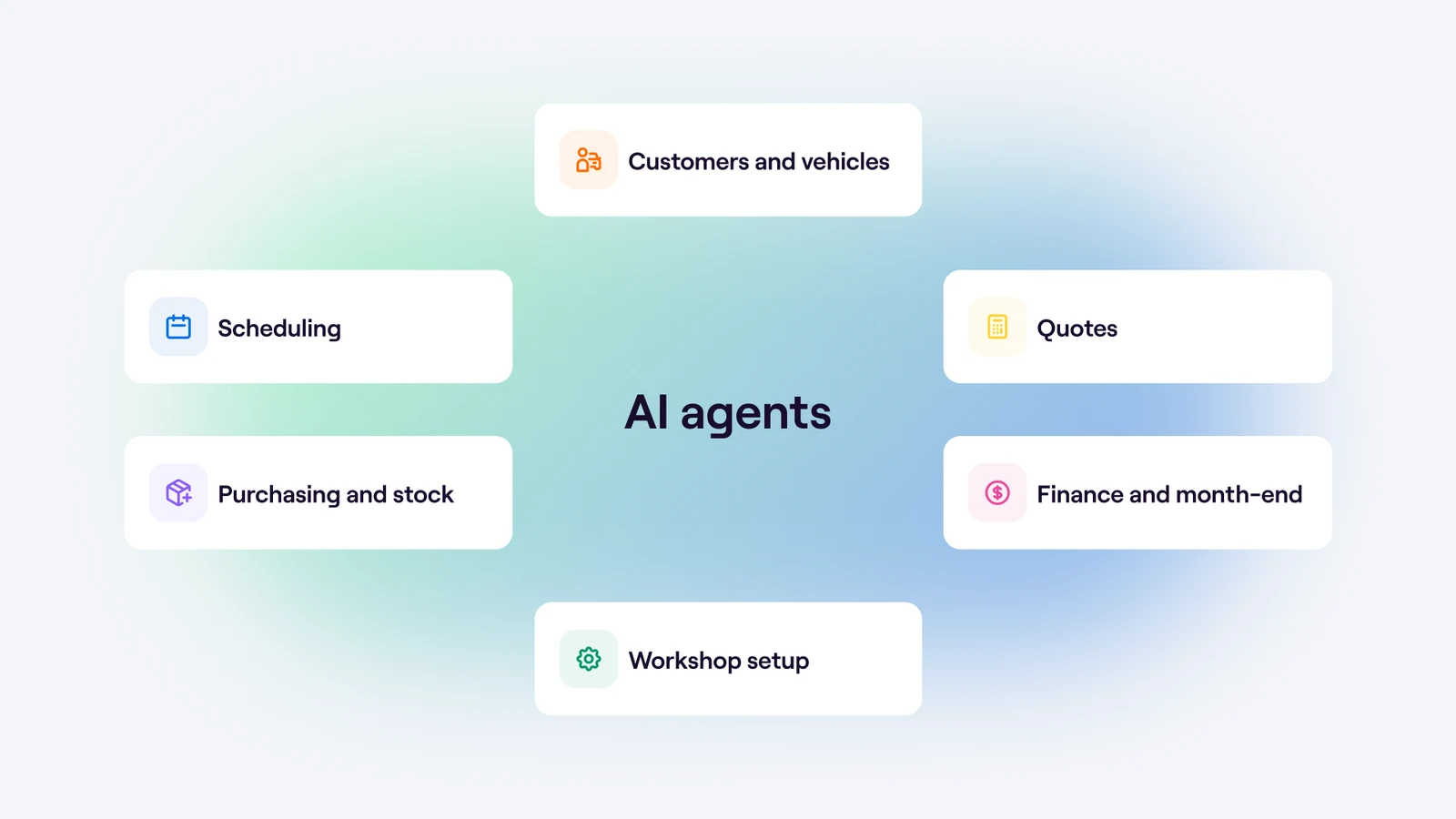
Gli altri vivono nella chat della piattaforma, ed ecco la parte comoda: è un’unica conversazione per tutto. Niente agente da scegliere, niente menu in cui cercare; scrivi ciò che ti serve e risponde la specialità giusta.
- Agenda e appuntamenti — «cosa ho giovedì pomeriggio?», «sposta quello delle 10 a lunedì».
- Clienti e veicoli — lo storico completo di una targa senza aprire quattro schermate.
- Preventivi — dettane uno mentre hai l’auto davanti.
- Acquisti e magazzino — cosa hai, cosa manca e cosa si è mosso.
- Configurazione dell’officina — orari, servizi, postazioni, dipendenti, magazzini, regole di prezzo e la tua immagine, passo dopo passo e senza manuale.
- Finanza e chiusura del mese — margine, andamento del fatturato, clienti principali e dove sta la leva per migliorare.
Tutto ciò che risponde viene consultato nei tuoi dati in quel momento. Ciò che non può consultare, non lo afferma.
La vera differenza: conosce le auto, non solo la conversazione
Ecco ciò che distingue davvero questi agenti da un normale chatbot. Un chatbot generico sa conversare e leggere un elenco di domande frequenti; appena la conversazione entra nel mestiere, si ferma sulla porta. I nostri agenti hanno alle spalle una libreria di conoscenza automotive, scritta per questo e revisionata da persone di officina, costruita sugli standard del settore: le tabelle ETRTO degli indici di carico e di velocità, il regolamento europeo sull’etichettatura, le norme della revisione.
Abbiamo iniziato da dove un’officina si gioca gran parte del suo quotidiano, lo pneumatico, e lì il livello di dettaglio è quello di chi ha passato anni al banco:
- Decifra qualsiasi sigla sul fianco. Il cliente fotografa il suo pneumatico e chiede cosa significa: 205/55 R16 91V, XL, RunFlat, l’omologazione del costruttore (MO, AO, ★), la data DOT. Legge tutto e lo spiega.
- Dà il dato esatto, non un’approssimazione. Quale velocità consente un codice, quanti chili porta un indice di carico.
- Conosce le regole che non si discutono. Battistrada minimo legale, cosa non si può combinare tra gli assi, perché gli pneumatici nuovi vanno dietro, quando una foratura si può riparare e quando no, cosa controlla la revisione.
- Legge i sintomi. «Ho gli pneumatici consumati all’interno», «c’è una vibrazione a 120», «fa rumore quando freno» — e li trasforma in ciò che vale la pena controllare.
- Consiglia, non spinge. Estivi, invernali o quattro stagioni a seconda dell’uso; cosa cambia su un’auto elettrica; quale gamma ha senso per ogni esigenza e perché, con l’etichetta europea sul tavolo.
E c’è un limite che non supera mai, ed è proprio ciò che lo rende affidabile: ciò che sa del settore lo spiega; ciò che riguarda quell’auto o quell’officina — quale misura monta, cosa c’è in magazzino, quanto costa, quale spazio è libero — lo dice solo se una consultazione al sistema lo restituisce. Non se lo inventa mai. E non chiude mai un guasto come diagnosi: parla di una possibile causa e suggerisce di portare l’auto in officina.
Conoscenza del settore più i dati della tua officina. La maggior parte dei chatbot non ha né l’una né gli altri: risponde da un copione. Questo risponde come qualcuno al tuo banco.
E uno che serve i tuoi clienti, non il tuo team
L’ultimo non lavora verso l’interno. Gestisce le conversazioni che arrivano dal canale che i tuoi clienti usano già ogni giorno — WhatsApp nella maggior parte dei mercati, LINE a Taiwan — e le porta avanti mentre l’officina è al massimo: chi chiede gli orari riceve gli orari, chi vuole un appuntamento lo fissa, chi chiede della sua auto sa a che punto è. E chi chiede qualcosa di tecnico riceve una risposta tecnica, perché dietro c’è la stessa libreria.
Si presenta sempre per ciò che è — un agente, non una persona — e l’officina decide quanto può fare: fissare e spostare appuntamenti, rispondere sui prezzi di ciò che è a catalogo, spiegare un preventivo, segnalare una manutenzione in scadenza. Ognuna si attiva separatamente, e ognuna può restare su «propone, tu confermi».
E non è cosa da poco: nello studio sull’assistenza 2025 di Cox Automotive, condotto su quasi 2.000 automobilisti, il 45% era insoddisfatto della propria esperienza, e i due motivi principali erano i costi imprevisti e la comunicazione carente. Non la riparazione: la comunicazione.
Quando serve una persona, interviene una persona
Nessuna IA sa tutto, ed è proprio qui che molti strumenti lasciano il cliente in sospeso. Qui il passaggio è previsto, e l’officina sceglie quando avviene. Una persona prende in mano la conversazione quando:
- Il cliente chiede di parlare con qualcuno. Alla prima richiesta, senza insistere.
- L’agente non conosce la risposta. Passa la mano invece di inventare.
- C’è rabbia o un reclamo. Coglie il tono e passa la conversazione senza discutere.
- Il guasto riguarda la sicurezza. Freni, sterzo, airbag, fumo o un rumore strano non si risolvono via messaggio.
- L’importo supera quanto concordato. Oltre il limite che fissi tu, prepara il preventivo e attende la tua approvazione.
Chi interviene lo fa con tutta la conversazione davanti, così il cliente non deve ripetere nulla. E una volta risolto, il controllo torna all’agente e la conversazione prosegue normalmente. Decidi tu chi gestisce i passaggi e dove ti avvisiamo; se nessuno risponde in tempo, viene avvisato il responsabile e al cliente viene detto quando avrà una risposta.
Perché puoi fidarti di ciò che propongono
Un agente che decide da solo e non sa spiegarsi non serve in officina. Per questo funzionano tutti allo stesso modo, ed è utile sapere come:
- Due livelli. I numeri — prezzi, priorità, quantità — li calcola la piattaforma, non il modello. L’agente ci mette sopra il motivo, in una riga comprensibile.
- Ancorati ai tuoi dati. Ciò che una consultazione alla tua officina non restituisce, non viene affermato.
- Ogni officina, il suo mondo. Il perimetro viene dalla sessione: un agente vede solo i dati dell’officina da cui viene interrogato.
- Limiti che fissi tu. Sconto massimo, l’importo che può chiudere da solo, argomenti che non tocca, orari in cui non si scrive a nessuno.
- Il volante è tuo. Scegli in quali moduli interviene e se in ognuno si limita a proporre. Tutto ciò che arriva al tuo cliente, lo confermi tu.
Il lunedì successivo
Torniamo alle 8:05. L’ordine della giornata arriva proposto con il suo ragionamento accanto. Il preventivo di giovedì ha un motivo concreto per essere ripreso. L’ordine è stato confrontato con il tuo magazzino. L’aggiornamento sull’auto riconsegnata ieri è partito quando lo hai confermato. E delle tre persone che hanno scritto domenica sera, due hanno avuto la risposta già domenica sera — una chiedeva cosa significasse la sigla sul suo pneumatico — e la terza aspetta te, perché l’agente ha capito che serviva qualcuno dell’officina.
Niente di tutto questo l’ha fatto un’IA che sa tutto. L’hanno fatto diversi agenti che conoscono ognuno il proprio mestiere, con la conoscenza del settore alle spalle, nel posto in cui lavori già. Sei sempre tu a decidere. Solo che decidi su cose che arrivano pronte.